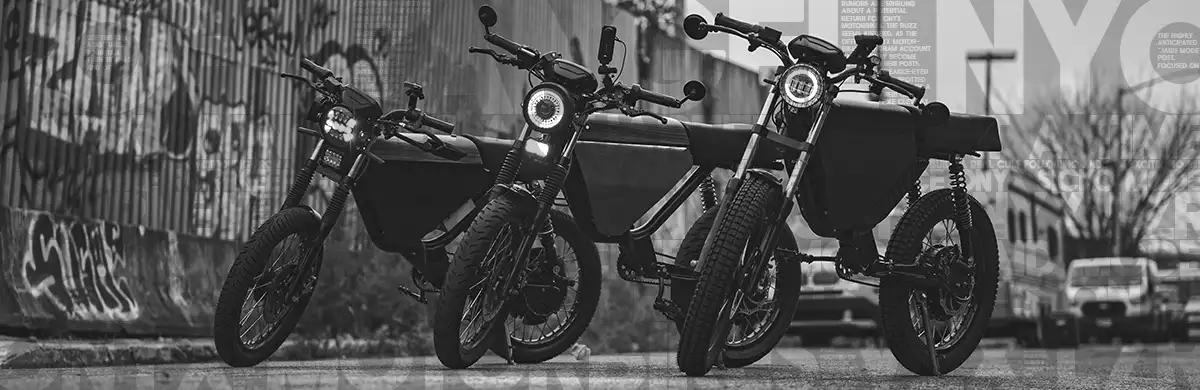
This article focuses specifically on the ONYX 72V platform and whether inner tubes can be used inside tubeless motorcycle tires. While much of the technical information also applies to the ONYX 80V platform, there is no need to install inner tubes on the 80V platform.
When it comes to motorcycle tires, I always recommend starting with the tire manufacturer’s specifications and instructions. One thing I’ve noticed over the years is how often motorbike owners turn to forums, Discord, or other riders for technical answers without first checking what the manufacturer actually says. There’s nothing wrong with asking the community, but whether we’re talking about tires, batteries, controllers, motors, or brakes, the component manufacturer should always be our starting point.
So, can you use an inner tube inside a tubeless motorcycle tire? Yes, as long as the tire manufacturer approves it and the tire, tube, and rim are compatible. A TUBELESS marking does not automatically prohibit an inner tube. Manufacturers including Michelin, Pirelli, Continental, and Bridgestone recognize certain approved tire and tube combinations.
I’ve personally installed and ridden with inner tubes inside tubeless tires, including tires with rough or textured interiors. Over roughly seven years, I’ve seen a considerable number of ONYX owners on the 72V platform use this setup. I’m not aware of a failure specifically attributable to using an inner tube inside a compatible tubeless tire. That’s based on my experience and observations, not a formal reliability study.
Questions about friction, heat, premature tube wear, flats, and reduced riding range are worth discussing. The important distinction is between problems that can occur under certain conditions and problems that are inevitable.
This article examines manufacturer guidance, common misconceptions, installation mistakes, and the zip tie mounting method, with a focus on 17-inch motorcycle and moped tires used on ONYX 72V motorbikes, including 2.75-17, 3.00-17, and 4.00-17.
What Major Tire Manufacturers Say About Tubes in Tubeless Tires
Major motorcycle tire manufacturers recognize that certain tubeless tires can be used with inner tubes. However, their requirements differ, particularly regarding rim construction.
Michelin
Michelin recognizes using an inner tube when an appropriate tubeless motorcycle tire is mounted on a compatible tube-type rim.
Its guidance addresses correct tube sizing and protecting the tube from exposed spoke nipples. Michelin does not recommend adding a tube to a tubeless tire mounted on a tubeless alloy rim.
Source: Michelin - How to Choose a Motorcycle Inner Tube
Pirelli
Pirelli recognizes inner tubes in certain tubeless motorcycle tire configurations. Its technical documentation addresses tire and rim compatibility, tube selection, and installation requirements.
Restrictions can vary by tire construction and speed rating, so approval for one Pirelli tire does not establish approval for every model.
Source: Pirelli - Motorcycle Technical Databook
Continental
Continental recognizes using suitable tubeless motorcycle tires with correctly sized inner tubes on compatible tube-type rims.
Its guidance also distinguishes tube-type and tubeless rim configurations. A combination approved for a tube-type rim may not be permitted on a tubeless rim.
Source: Continental - Combining Tubeless and Tube-Type Motorcycle Tires With Rims
Bridgestone
Bridgestone recognizes approved tubeless motorcycle tire and inner-tube combinations. Some tires include sidewall instructions specifying when a tube is required on a tube-type rim.
Check the exact tire model and its sidewall markings rather than relying on the TUBELESS designation alone.
Source: Bridgestone - Motorcycle Tire Safety and Maintenance
The common conclusion is that a TUBELESS marking does not automatically prohibit using an inner tube. Compatibility depends on the specific tire, tube, rim, and manufacturer’s instructions.
For ONYX 72V owners, start by identifying whether your wheel requires an inner tube. Then check whether the manufacturer approves your specific tubeless tire for use with that wheel and a correctly sized tube.
Approval for a tube-type rim does not automatically mean the same tire and tube combination is approved for a tubeless rim.
Can You Use Inner Tubes in Tubeless Moped Tires and Wheels?
Yes. ONYX 72V owners can use inner tubes inside compatible tubeless motorcycle and moped tires when the tire manufacturer approves the combination.
This includes appropriately rated tires in the 2.75-17, 3.00-17, and 4.00-17 sizes commonly used on ONYX motorbikes. However, tire size alone does not establish compatibility.
The wheel is just as important as the tire:
- Tubeless tires (TL): Have an airtight inner liner and are designed to retain air without a tube on compatible tubeless rims.
- Tube-type tires (TT): Rely on an inner tube to retain inflation pressure.
- Tube-type wheels: Conventional spoked rims often require tubes because spoke openings prevent the rim from retaining air.
- Tubeless wheels: Are designed to retain air with compatible tubeless tires and may have different bead-seat requirements.
Some spoked wheels are designed for tubeless operation, so spoke construction alone is not a definitive test.
To identify your ONYX 72V wheel type, check the wheel manufacturer’s specifications, rim markings, and original wheel configuration. This is especially important if you’ve installed aftermarket wheels.
For ONYX 72V owners, the practical question is whether the specific tire manufacturer permits an inner tube with the wheel being used. A tubeless tire may be approved for use with a tube on a tube-type rim but not on a tubeless rim.
If the tire, tube, and wheel are compatible, the TUBELESS marking alone is not a reason to avoid the combination.
Are Tubeless Tires Rough or Textured on the Inside?
A rough or textured tire interior does not automatically damage an inner tube or make a compatible tubeless tire unsuitable for use on an ONYX 72V.
Some tubeless tires have relatively smooth inner liners, while others have visible manufacturing texture. Tube-type tires can also have textured interiors, construction markings, and other manufacturing features.
The difference between TL and TT tires is primarily how they retain air, not whether the interior feels perfectly smooth.
What ONYX owners should look for is actual damage or anything that could puncture or abrade the tube:
- Exposed reinforcement materials.
- Sharp projections or damaged inner liners.
- Foreign objects or loose debris.
- Internal tire damage.
These conditions should be inspected and addressed before installation.
Ordinary manufacturing texture is not the same as tire damage. A textured interior alone does not establish that an inner tube will wear through or fail.
Do Inner Tubes Cause Friction, Heat, and Premature Wear?
No, the rough or textured interior of a tubeless motorcycle tire does not automatically cause excessive friction, overheating, or premature inner tube failure on an ONYX 72V.
One concern I’ve heard is that the rough interior of a tubeless tire can rub against an inner tube, creating friction and heat that eventually wear through the rubber. It’s an understandable concern, but that’s not quite how a properly inflated tire and inner tube work together.
Friction Between the Tire and Tube
When an inner tube is inflated, air pressure pushes it firmly against the tire’s interior. The tube and tire flex together as the wheel rotates. They aren’t constantly sliding against each other like two loose surfaces rubbing together.
Some movement and friction can occur during normal riding, but ordinary manufacturing texture doesn’t automatically cause damaging abrasion.
Does Friction Generate Excessive Heat?
All motorcycle tires generate heat as their rubber and reinforcing materials flex during riding. An inner tube can contribute some additional heat and energy losses, but that doesn’t mean a textured tire interior will cause the tube to overheat.
Excessive heat is more closely associated with issues such as low tire pressure, overloading, excessive speed, or operating outside the manufacturer’s limits.
Normal tire flexing and heat generation don’t mean the tire’s interior is constantly rubbing away at the inner tube.
What Actually Causes Premature Tube Wear?
When an inner tube wears out prematurely, it’s worth checking for common causes such as:
- Incorrect tube sizing that causes stretching or folding.
- Low tire pressure that allows excessive deformation.
- Improper installation that leaves the tube twisted or pinched.
- Damaged tire interiors, sharp objects, or exposed reinforcement materials.
- Damaged rim strips or other wheel components.
These problems can happen inside tube-type tires as well.
For ONYX 72V owners, a rough or textured tubeless tire interior isn’t automatically a reason to worry about friction, overheating, or premature tube wear. As always, the best approach is to confirm manufacturer compatibility, install the tube correctly, and maintain proper tire pressure.
Can Inner Tubes Cause Slow Leaks or Flats?
Using an inner tube inside a compatible tubeless tire does not automatically make an ONYX 72V more prone to slow leaks or flat tires.
An inner tube can develop a puncture or slow leak inside either a tubeless or tube-type tire. The important question is what caused the damage.
Common causes include:
- Road debris such as nails or glass.
- Tire lever pinches during installation.
- Incorrect tube sizing or positioning.
- Insufficient inflation pressure.
- Damaged valve stems or valve cores.
- Worn or displaced rim strips.
- Sharp objects or damaged tire interiors.
Inner tubes can also lose air gradually through normal air permeation without having a puncture.
There is an important difference between a tubeless tire operating without a tube and one using an inner tube.
When a nail punctures a tubeless tire operating without a tube, the object may temporarily restrict air loss. When an inner tube is punctured, air can escape from the tube and travel through the space between the tire and rim, sometimes causing more rapid pressure loss.
This does not mean that a compatible tire and tube combination is inherently unreliable. It means punctures can behave differently depending on how the tire retains air.
If an ONYX 72V develops a flat, the location and appearance of the tube damage can help identify the cause.
Paired punctures may indicate a pinch-related failure, while damage near the valve stem may suggest tube movement or improper installation. An angled valve stem can also indicate that the tube has shifted inside the tire.
A slow leak or flat should be diagnosed according to the actual damage rather than automatically blamed on the tubeless tire construction.
Do Inner Tubes Reduce ONYX Riding Range?
For ONYX 72V owners, installing an inner tube inside a compatible tubeless tire is unlikely to make a noticeable difference in riding range.
An inner tube adds some weight and can slightly increase rolling resistance, but that doesn’t necessarily translate into a meaningful loss of range during everyday riding.
I haven’t conducted controlled range testing with and without inner tubes on the ONYX 72V, so I can’t give you a verified range difference.
Tire pressure, tire selection, riding speed, and acceleration have a much greater influence on how far an ONYX can travel on a charge.
While I can’t provide a verified percentage without controlled testing, I wouldn’t consider reduced riding range a practical reason to avoid an otherwise compatible tire and tube combination.
Common Inner Tube Installation Mistakes
Even an approved tire and tube combination can fail when installed incorrectly.
For ONYX 72V owners, the most common installation mistakes to avoid include:
- Incorrect tube size: Oversized tubes can fold, while undersized tubes may stretch excessively.
- Pinching with tire levers: Trapping the tube between a lever and rim can cause immediate or delayed punctures.
- Twisted or folded tubes: Uneven positioning creates concentrated stress and potential abrasion.
- Damaged rim strips: Exposed spoke nipples or sharp rim components can puncture the tube.
- Incorrect valve stem positioning: Sideways tension can damage the valve stem or indicate tube movement.
- Improper mounting lubricant: Use only tire manufacturer-approved products.
- Incorrect inflation or bead seating: Follow the manufacturer’s pressure limits and verify that both beads seat evenly.
Keeping the opposite tire bead in the rim’s drop center reduces the force needed during mounting.
Adding a small amount of air before installation can help the tube hold its shape. When using tire levers, avoid inserting them deeper than necessary to reduce the risk of pinching the tube.
Inspect the rim for sharp edges, corrosion, and damaged rim strips before installing the tire.
Never exceed the manufacturer’s maximum mounting pressure to force a stubborn bead into position. Deflate and inspect the assembly if the bead does not seat correctly.
The Zip Tie Method for Installing Inner Tubes
The zip tie method is particularly useful when installing stiff 17-inch motorcycle and moped tires on ONYX 72V wheels.
It reduces tire lever use by temporarily compressing the tire beads together before mounting the tire and tube assembly.
This makes it easier to position the beads in the rim’s drop center and can reduce the risk of pinching the tube.
Installation Steps
- Confirm that the tire, tube, and rim are compatible.
- Inspect the tire interior, rim, and rim strip for damage or debris.
- Place the correctly sized inner tube inside the tire.
- Add a small amount of air so the tube holds its shape.
- Position at least six suitably sized zip ties evenly around the tire.
- Tighten the ties enough to bring the beads together without damaging the tire or tube.
- Position the valve stem through the rim opening.
- Mount the compressed tire and tube assembly, keeping the beads in the drop center.
- Use appropriate mounting tools and manufacturer-approved lubricant as needed.
- Remove every zip tie before inflation.
- Check that the tube is not trapped between the bead and rim.
- Inflate according to manufacturer instructions and verify even bead seating.
- Check valve stem position, tire rotation direction, and inflation pressure.
- Inspect the completed assembly and balance the wheel as required.
Important Precautions
The zip tie method reduces mounting difficulty but does not eliminate installation risks.
Avoid sharp zip tie edges, excessive tightening, trapped tubes, and improper lubricants.
Never inflate the assembly with zip ties still installed.
After installation, recheck tire pressure and inspect the valve stem before riding. The valve stem should be correctly positioned without visible sideways tension.
If mounting requires excessive force, stop and inspect the components and technique before continuing.
How to Check Tire Compatibility and Final Advice for ONYX Owners
For ONYX 72V owners considering a tubeless motorcycle or moped tire, the most important questions are whether the manufacturer permits an inner tube, whether the wheel is compatible, and whether the assembly can be installed correctly.
Before installing an inner tube, confirm the following:
- Tire identification: Record the manufacturer, model, size, load index, speed rating, and sidewall markings.
- Wheel construction: Determine whether the rim is designed for tube-type or tubeless operation.
- Manufacturer approval: Check whether the exact tire is approved for use with an inner tube on that wheel.
- Tube compatibility: Select an inner tube approved for the tire’s size range, with the correct valve configuration for the wheel.
- Component condition: Inspect the tire interior, rim, rim strip, and tube.
- Installation: Follow the manufacturers’ mounting, inflation, and operating requirements.
If compatibility cannot be confirmed, contact the tire manufacturer before proceeding.
For the ONYX 72V platform, using an inner tube inside a compatible tubeless tire is a legitimate option when the tire manufacturer approves the combination and the installation is performed correctly.
The important concerns are compatibility, correct tube sizing, inflation pressure, and installation quality, not simply whether the tire has a TUBELESS marking or a textured interior.
If you’ve used inner tubes inside tubeless tires on your ONYX 72V, feel free to share your tire model, tube size, wheel configuration, and experience.
Real-world observations are valuable, especially when we can compare them with the manufacturer’s technical guidance.